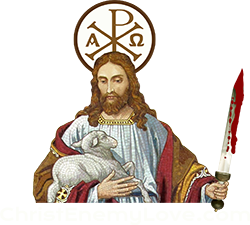

In Luke 9:51–56, as Jesus resolutely sets his face toward Jerusalem (fulfilling Isaiah 50:7), he sends messengers ahead into a Samaritan village. The inhabitants refuse to receive him “because his face was set toward Jerusalem” (Luke 9:53)—a reflection of longstanding hostility between Jews and Samaritans over the proper place of worship. Angry at this rejection, James and John ask Jesus:
“Lord, do you want us to command fire to come down from heaven and consume them, as Elijah did?” (Luke 9:54).
Their proposal explicitly invokes the precedent of 2 Kings 1:9–12, where the prophet Elijah twice called down fire from heaven upon companies of soldiers sent by King Ahaziah to seize him.
In that context, the fire was an act of divine judgment against deliberate opposition to God’s prophet and, by extension, to God himself. Jesus’ response is swift and decisive:
“He turned and rebuked them” (Luke 9:55).
In the longer reading preserved in many ancient manuscripts, we read:
“You do not know what manner of spirit you are of; for the Son of Man came not to destroy men’s lives, but to save them” (Luke 9:55–56).
The group then departs peacefully for another village.
This brief episode illuminates a profound theological contrast between the spirit that characterized much of the Old Testament prophetic ministry and the spirit that defines the ministry of Christ under the new covenant.
The prophetic spirit exemplified by Elijah operated within the framework of the old covenant. God’s holiness required vigorous defense against idolatry and rebellion. Divine judgment—whether through fire from heaven (2 Kings 1:10–12), plague (Numbers 16:35), or holy war (Deuteronomy 20:16–18)—served to vindicate God’s name, preserve covenant purity, and restrain evil in a theocratic context. Such acts, while severe, were not arbitrary; they were governed by the principles of justice revealed in the Torah and enacted through God’s appointed servants.
In contrast, Jesus reveals a new spirit in harmony with the new covenant foretold by the prophets, now fulfilled in part by the ministry of Jesus and his apostles:
“I will put my law in their minds and write it on their hearts” (Jeremiah 31:33); “I will give you a new heart and put a new spirit within you” (Ezekiel 36:26).
This spirit is marked not by destruction but by longsuffering enemy love. Jesus declares his purpose explicitly:
“For the Son of Man came to seek and to save the lost… not to condemn the world, but that the world through him might be saved” (Luke 19:10; John 3:17).
The difference is further underscored in Jesus’ teaching throughout the Gospels. He instructs his followers:
“You have heard that it was said, ‘An eye for an eye and a tooth for a tooth.’ But I say to you, do not resist the one who is evil… Love your enemies and pray for those who persecute you” (Matthew 5:38–39, 44).
Where the old covenant restrained evil through proportionate lethal violence, the new covenant overcomes evil through sacrificial love.
Luke 9:51–56 thus serves as a pivotal revelation.
The same Jesus who will soon ascend (echoing Elijah’s own ascension in 2 Kings 2) does not replicate Elijah’s judgment but redirects prophetic zeal toward repentance. On the cross, he absorbs the fire of divine wrath that humanity deserves, crying not for vengeance but for forgiveness:
“Father, forgive them, for they know not what they do” (Luke 23:34).
This transition—from a spirit of righteous judgment to a spirit of redeeming grace—defines the ethic of the new covenant. While the Old Testament remains Scripture and testifies to God’s unchanging holiness, its patterns of judgment find their fulfillment and transformation in Christ. Believers are now called to embody the spirit Jesus revealed: patient, merciful, and committed to the salvation of others, even at great cost.
As Paul later writes, “The letter kills, but the Spirit gives life” (2 Corinthians 3:6).
In rebuking his disciples, Jesus invites them—and us—into that life-giving Spirit.