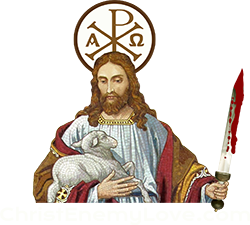

Many Christians would agree—and proudly affirm—that they must remain faithful to Jesus even if obedience costs them their lives. Most would honor the martyrs who refused to fight back or take up arms against their enemies to save themselves from torture or death. If persecuted specifically for the faith, many Christians say they should patiently suffer, forgive and love their enemies, and accept death rather than kill.
But if threatened for almost any other reason—for example, by an attack on their family or country—many suddenly claim a “God-given right,” or even a “Christian duty,” to kill the enemy.
These Christians will readily quote the commands to love their enemies and suffer for the faith. Yet a striking contradiction appears when the threat comes for any reason other than the gospel or the name of Jesus. Their mindset seems to be:
“I will not kill someone who attacks me for my faith, but I am prepared to kill in defense of myself, my family, my friends, or my country.”
But where does Jesus make such a distinction?
Jesus did not qualify his command, “Love your enemies,” by saying, “only when they persecute you for my name.” Instead, he went on to command us to “pray for those who persecute you” (Matt. 5:44).
Paul did not say, “Do not repay evil for evil only when preaching the gospel.” He simply commanded:
“Do not repay anyone evil for evil” (Rom. 12:17).
And more than that:
“Never avenge yourselves” (Rom. 12:19).
“Do not be overcome by evil, but overcome evil with good” (Rom. 12:21).
Peter likewise presented the suffering of Jesus as the pattern for Christians generally:
“When he was abused, he did not return abuse; when he suffered, he did not threaten” (1 Pet. 2:23).
Jesus’ refusal to kill was not merely a strategy for evangelism. It revealed the character of the life he commanded his followers to live. At his arrest, Jesus rejected lethal self-defense even though he was innocent and facing torture and death. After Peter attempted to strike down his enemy, Jesus rebuked him:
“Put your sword back into its place, for all who take the sword will perish by the sword” (Matt. 26:52).
Jesus said he could have called more than twelve legions of angels (Matt. 26:53), yet he refused to destroy his enemies. On the cross, he prayed for them:
“Father, forgive them” (Luke 23:34).
Later, Stephen, the first Christian martyr, followed the same pattern. While being stoned, he prayed, like Jesus:
“Lord, do not hold this sin against them” (Acts 7:60).
Neither Jesus nor Stephen asked whether their attackers were motivated by religion, politics, crime, fear, or personal hatred. The Christian response remained the same: faithfulness, forgiveness, and a refusal to kill.
The inconsistency of popular Christianity is therefore difficult to escape. Many Christians are prepared to die rather than deny Jesus, yet they are prepared to kill in order to preserve almost everything else. They will surrender their lives for the gospel but are ready to take another person’s life for country, property, or family.
This reverses the priorities of Jesus. The believer is called not merely to die for Jesus but to live—and, if necessary, suffer and die—for his gospel of the Kingdom.
The New Testament does not teach that enemy-love applies only when suffering for the faith. After all, anyone can love an enemy who presents no real threat. The true test comes when the enemy causes fear, pain, or loss. That is precisely when Christians are commanded to imitate the crucified Messiah, entrust themselves to God, refuse vengeance, and overcome every form of evil with good.
Simply put, New Testament nonviolence is not limited to persecution “for the faith.”
It is the faith.


Signature: YLnQvfddA2MpNbRD5eQ6rDm65YEl/n6q8Gt96f/bJ8VtPGewgxlxjb6Zg1AmwmNGs2XFSBBKedheDop43SyiV0Ev/kXIuXJ0qdxgfRkRqJqE8dzr1o0sIqvqjtTKi3/CO5lJLXye1eD0uH4Uaz75R4e5omhEpD716ZGGmxqUEsTiIYp5frNuVPIs13wwezvQDf1dL6s3vFE9tOD2EwFMWlH2PfwpVNJ2WDPTJiCWoPs92OZ8ndCk1YbQs+a5xYQm/Cb1IRJB/9xxKcMvbrikqns7yK9ki7DmUxwOrMxDA1TzQqu6eKCq9dMAzCyyaimKXN6vDPA2QTSQSHcs2/XzD24gheKgmbbq5/lCmUf1RWBL1xtL71kYB+JXPlroLzvx4aysGOg1rd4/I4liBNjVIfhrmMKX1TeSK3nDJGqHw4cS+l7vSGzRkA9Qf+Mx8Ql1XwonDFYpaYz5M5ZdYy/j7Hb9iLQuqNLycln1UUQV27QLgkrsKnPnhgFO9X18Zbohbq4T5mt7IEgE9nfe5HEEX7ABx9QW5+c37Gb+tg+/1CZ4cx51nbLiZduq9q7NqKUtX9ypyg2Ci2FZvx8qQULni99LwpB2vcnzta8Dg3AyRYFm986mQbZRmw8YESg+f+12dMb7Nj5BaUe9YmPRTbmatiX7IbjXJzaz1HdMblGtxJwt9/eg8IC7riANPVpzdrKssQH67X/dvrzfPPKO8ZAjzBB0d6sTKZu7UnauBWWqfHEmfRWjeeWcIbZqtY0Kf9G64uWjPGaMGu5wF09EWZ9T5WiZKtwykW9Jld/H/lH2XJqoeDrGpe9tNIIS3dXWB9Xq/8a26h1fzWaRgCIiCaw6kArCvSuhZVfJHdMRgT1zacKyIOb37NYcsGzlFDKjsaW0D51opdJPmssaIywaDn/tmnuIJITlav8EVr5rL5zsoxeFlJX4wN0DRcc8Ghsq8gct

Signature: YLnQvfddA2MpNbRD5eQ6rDm65YEl/n6q8Gt96f/bJ8VtPGewgxlxjb6Zg1AmwmNGs2XFSBBKedheDop43SyiV0Ev/kXIuXJ0qdxgfRkRqJqE8dzr1o0sIqvqjtTKi3/CO5lJLXye1eD0uH4Uaz75R4e5omhEpD716ZGGmxqUEsTiIYp5frNuVPIs13wwezvQDf1dL6s3vFE9tOD2EwFMWlH2PfwpVNJ2WDPTJiCWoPs92OZ8ndCk1YbQs+a5xYQm/Cb1IRJB/9xxKcMvbrikqns7yK9ki7DmUxwOrMxDA1TzQqu6eKCq9dMAzCyyaimKXN6vDPA2QTSQSHcs2/XzD24gheKgmbbq5/lCmUf1RWBL1xtL71kYB+JXPlroLzvx4aysGOg1rd4/I4liBNjVIfhrmMKX1TeSK3nDJGqHw4cS+l7vSGzRkA9Qf+Mx8Ql1XwonDFYpaYz5M5ZdYy/j7Hb9iLQuqNLycln1UUQV27QLgkrsKnPnhgFO9X18Zbohbq4T5mt7IEgE9nfe5HEEX7ABx9QW5+c37Gb+tg+/1CZ4cx51nbLiZduq9q7NqKUtX9ypyg2Ci2FZvx8qQULni99LwpB2vcnzta8Dg3AyRYFm986mQbZRmw8YESg+f+12dMb7Nj5BaUe9YmPRTbmatiX7IbjXJzaz1HdMblGtxJwt9/eg8IC7riANPVpzdrKssQH67X/dvrzfPPKO8ZAjzBB0d6sTKZu7UnauBWWqfHEmfRWjeeWcIbZqtY0Kf9G64uWjPGaMGu5wF09EWZ9T5WiZKtwykW9Jld/H/lH2XJqoeDrGpe9tNIIS3dXWB9Xq/8a26h1fzWaRgCIiCaw6kArCvSuhZVfJHdMRgT1zacKyIOb37NYcsGzlFDKjsaW0D51opdJPmssaIywaDn/tmnuIJITlav8EVr5rL5zsoxeFlJX4wN0DRcc8Ghsq8gct




Signature: YLnQvfddA2MpNbRD5eQ6rDm65YEl/n6q8Gt96f/bJ8VtPGewgxlxjb6Zg1AmwmNGs2XFSBBKedheDop43SyiV0Ev/kXIuXJ0qdxgfRkRqJqE8dzr1o0sIqvqjtTKi3/CO5lJLXye1eD0uH4Uaz75R4e5omhEpD716ZGGmxqUEsTiIYp5frNuVPIs13wwezvQDf1dL6s3vFE9tOD2EwFMWlH2PfwpVNJ2WDPTJiCWoPs92OZ8ndCk1YbQs+a5xYQm/Cb1IRJB/9xxKcMvbrikqns7yK9ki7DmUxwOrMxDA1TzQqu6eKCq9dMAzCyyaimKXN6vDPA2QTSQSHcs2/XzD24gheKgmbbq5/lCmUf1RWBL1xtL71kYB+JXPlroLzvx4aysGOg1rd4/I4liBNjVIfhrmMKX1TeSK3nDJGqHw4cS+l7vSGzRkA9Qf+Mx8Ql1XwonDFYpaYz5M5ZdYy/j7Hb9iLQuqNLycln1UUQV27QLgkrsKnPnhgFO9X18Zbohbq4T5mt7IEgE9nfe5HEEX7ABx9QW5+c37Gb+tg+/1CZ4cx51nbLiZduq9q7NqKUtX9ypyg2Ci2FZvx8qQULni99LwpB2vcnzta8Dg3AyRYFm986mQbZRmw8YESg+f+12dMb7Nj5BaUe9YmPRTbmatiX7IbjXJzaz1HdMblGtxJwt9/eg8IC7riANPVpzdrKssQH67X/dvrzfPPKO8ZAjzBB0d6sTKZu7UnauBWWqfHEmfRWjeeWcIbZqtY0Kf9G64uWjPGaMGu5wF09EWZ9T5WiZKtwykW9Jld/H/lH2XJqoeDrGpe9tNIIS3dXWB9Xq/8a26h1fzWaRgCIiCaw6kArCvSuhZVfJHdMRgT1zacKyIOb37NYcsGzlFDKjsaW0D51opdJPmssaIywaDn/tmnuIJITlav8EVr5rL5zsoxeFlJX4wN0DRcc8Ghsq8gct