The classic “Render to Caesar” passage in Matthew 22 follows the parable of the wedding banquet, which portrays people being invited to the Messianic banquet at the parousia, when Jesus is sent to establish the Kingdom of God on a restored earth. That context is important because Israel was then under the Roman yoke, subject to the authority of a foreign Gentile nation. Although the reconstituted nation of Israel continues to exist today, in 2026, it nevertheless remains largely secular and in unbelief.
Jesus said that the driving purpose of his life was to preach the Kingdom of God (Luke 4:43). This would be a new kind of government operating according to a different set of laws under the New Covenant. His teaching in Matthew 22 points toward this future theocracy under his leadership. Until the great day when the Kingdom is established on earth, God’s people are to give present rulers and governments what legitimately belongs to them while remaining faithful to the Christian obedience of faith.
The account begins by telling us that the Pharisees plotted to trap Jesus by something he might say. They sent their disciples to him, along with representatives of Herod’s party:
“Teacher, we know that you are truthful and teach the way of God in truth. You are not influenced by what people think, and you show no partiality. Tell us, then, what you think: Is it lawful to pay taxes to Caesar or not?”
Their question was not merely an intellectual exercise. It carried serious political and Messianic implications. If Jesus claimed to be the long-awaited and promised Jewish Messiah—the one who would restore the Davidic Kingdom—what would he say about paying taxes to another kingdom? Would he support submission to another king, or would he openly challenge Roman authority?
The involvement of the Herodians makes the political dimension even clearer. The Pharisees had strong national and religious aspirations, while the Herodians were associated with the ruling order that operated under Rome. Together, they confronted Jesus with a question designed to place him in danger regardless of how he answered.
As always, however, Jesus outsmarted them. Perceiving their evil intentions, he asked:
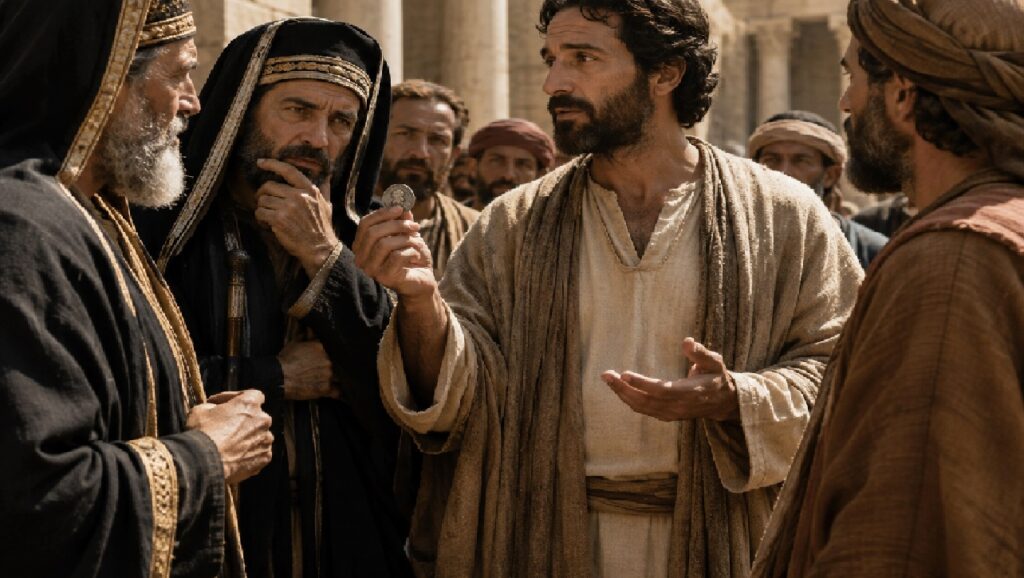
“Why are you testing me, you hypocrites? Show me the coin used to pay the tax.”
They brought him a denarius.
“Whose image and inscription are these?” he asked.
“Caesar’s,” they replied.
“Then give to Caesar what belongs to Caesar, and to God what belongs to God.”
With this answer, Jesus distinguished the people of God from the governments of this present evil age. This was not the nationalism of the Old Covenant, under which Israel existed as a geopolitical nation governed directly by God’s law, the Torah. Through his reply, Jesus was forming a new, international people of God whose primary citizenship and loyalty would differ from those of Old-Covenant Israel.
The new people of God are described in 1 Peter 2 using language that formerly applied to Old Testament Israel: “a chosen people, a royal priesthood, a holy nation, and God’s special possession.” This identity was now to be understood in a spiritual and nonterritorial sense: a nation composed of believers from every literal nation.
Paul calls this new international people of God the “Israel of God” in Galatians 6:16. Under this new arrangement, the people of God are no longer distinguished by circumcision, observance of the law given at Sinai, ethnicity, or descent from the royal house of David. Nor are they to define themselves primarily by earthly nationalism: “I am a Jew,” “I am a Gentile,” or, today, “I am an American” or “I am British.”
Their true commonwealth is coming from heaven, and their shared identity arises from allegiance to the King of that coming Kingdom—the Lord Messiah Jesus, who serves under his God and Father.
Psalm 96:5 says in the Greek translation that “all the gods of the nations are demons.” The nations are presently under the influence of both invisible spiritual powers and visible political authorities. The prophetic promise that the Messiah and his saints will one day rule the nations in righteousness therefore remains to be fulfilled.
Paul draws upon this Kingdom hope in Romans 15:
“Accept one another, just as the Messiah also accepted us, to the glory of God. For I tell you that the Messiah has become a servant to the Jews on behalf of God’s truth, to confirm the promises made to the fathers, so that the Gentiles may glorify God for His mercy.”
Paul then gathers several Old Testament prophetic texts:
- “I will confess you among the nations, and I will sing praises to your name.”
- “Rejoice, you Gentiles, with His people.”
- “Praise the Lord, all you Gentiles; let all the peoples praise Him.”
Finally, Paul quotes Isaiah:
- “The root of Jesse will come, the one who rises to rule over the nations; in him the Gentiles will hope.”
These passages reveal the formation of a people drawn from both Jews and Gentiles under the Messiah. This is the holy nation Jesus was gathering. His command to render to Caesar therefore represents an important biblical covenantal shift. His followers are to submit to the civil authorities of the present evil age without confusing those authorities with the Kingdom of God.
Matthew says that Jesus’ opponents were amazed by his response. Their national and theocratic expectations had been postponed. Jesus did not call for an immediate revolt against Rome, as many desperately desired and expected, nor was he sent at that time to establish God’s Kingdom through violence.
Jesus would indeed bring the Kingdom, but not yet. After all, the announcement in Mark 1:14–15 that “the Kingdom is at hand,” or “near,” does not mean that the Kingdom was already here in its fullness.
A similar pattern appears in Luke 4, when Jesus is handed the scroll of the prophet Isaiah. He strategically stops before the passage’s declaration of divine vengeance:
“To announce the year when the Lord will show His favor, the day when our God will seek vengeance” (Isaiah 61:2).
The day of judgment—when the wrath of God would come upon the demonized nations—had not yet arrived. Jesus’ first mission was to proclaim the good news of the coming Kingdom, gather the new people of God, and leave them with the Great Christian Commission:
“Go, therefore, and make disciples of people from all nations, baptizing them into the agenda and character of the Father, the Son, and the holy spirit. Teach them to obey everything I have commanded you. And remember, I am with you always, to the end of the age” (Matthew 28:19–20).
Jesus therefore acknowledged the temporary authority of governments over Israel and, by extension, over his own people down to the present day. This differed sharply from the kind of nationalistic Messiah many Jews expected. It also differs from the outlook of Christians today who, influenced by later Augustinian theories such as amillennialism and Just War, view the church or the Christian mission as the Kingdom already established.
By contrast, under the New Covenant established by Jesus, the people of God would no longer function as an earthly state enforcing divine law through political or military power.
The church and the state would have distinct roles because they operate under different authorities.
The church serves God through His Messiah, while earthly governments operate under emperors, kings, presidents, and other civil rulers.
The apostles continued this distinction, most clearly in Romans 12–13. Paul gives a series of Don’ts for Christian living now:
- Do not be conformed to this present evil age (v. 2).
- Do not lag in zeal; serve the Lord (v. 11).
- Do not curse (v. 14).
- Do not be haughty (v. 16).
- Do not be conceited (v. 16).
- Do not repay anyone evil for evil (v. 17).
- Do not avenge yourselves (v. 19).
- Do not be overcome by evil (v. 21).
Romans 13 then describes a different group: the governing “authorities.” They bear the sword and act as agents of wrath against wrongdoers.
The contrast is important.
In Romans 12, Christians are forbidden to avenge themselves.
In Romans 13, the governing authorities carry out vengeance against evildoers.
Paul does not instruct Christians to assume both roles. He distinguishes the nonretaliatory conduct of the people of faith from the coercive function of civil authorities.
In Romans 12, Christians are called to bless, forgive, serve, suffer faithfully, and overcome evil with good.
In Romans 13, the governing authorities maintain civil order through laws, punishment, and the sword.
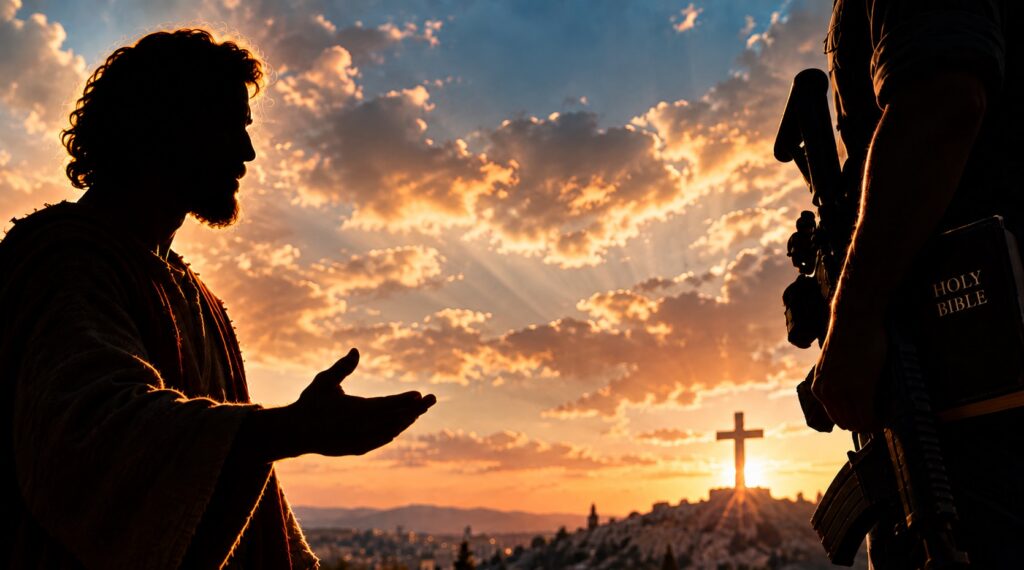
Jesus’ teaching in Matthew 22 therefore establishes a pattern that the apostles and the early church in Acts continued: give earthly authorities what legitimately belongs to them, but reserve worship and ultimate allegiance for God alone through His Messiah.
The Christian nation is not identified by borders, armies, political parties, or earthly citizenship. It is an international people gathered under the Messiah and governed by his New-Covenant law—the hallmark of the coming Kingdom.
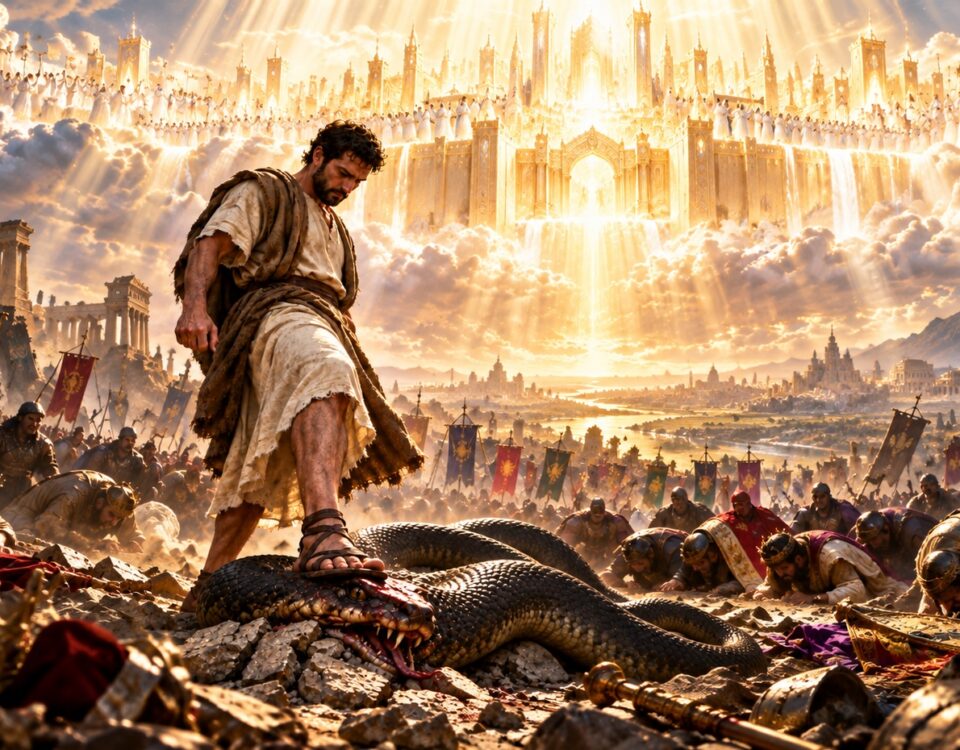
At the parousia, believers from all ages will finally be given possession and rulership of the world with Jesus (Revelation 2:26–29).


Signature: YLnQvfddA2MpNbRD5eQ6rDm65YEl/n6q8Gt96f/bJ8VtPGewgxlxjb6Zg1AmwmNGs2XFSBBKedheDop43SyiV0Ev/kXIuXJ0qdxgfRkRqJqE8dzr1o0sIqvqjtTKi3/CO5lJLXye1eD0uH4Uaz75R4e5omhEpD716ZGGmxqUEsTiIYp5frNuVPIs13wwezvQDf1dL6s3vFE9tOD2EwFMWlH2PfwpVNJ2WDPTJiCWoPs92OZ8ndCk1YbQs+a5xYQm/Cb1IRJB/9xxKcMvbrikqns7yK9ki7DmUxwOrMxDA1TzQqu6eKCq9dMAzCyyaimKXN6vDPA2QTSQSHcs2/XzD24gheKgmbbq5/lCmUf1RWBL1xtL71kYB+JXPlroLzvx4aysGOg1rd4/I4liBNjVIfhrmMKX1TeSK3nDJGqHw4cS+l7vSGzRkA9Qf+Mx8Ql1XwonDFYpaYz5M5ZdYy/j7Hb9iLQuqNLycln1UUQV27QLgkrsKnPnhgFO9X18Zbohbq4T5mt7IEgE9nfe5HEEX7ABx9QW5+c37Gb+tg+/1CZ4cx51nbLiZduq9q7NqKUtX9ypyg2Ci2FZvx8qQULni99LwpB2vcnzta8Dg3AyRYFm986mQbZRmw8YESg+f+12dMb7Nj5BaUe9YmPRTbmatiX7IbjXJzaz1HdMblGtxJwt9/eg8IC7riANPVpzdrKssQH67X/dvrzfPPKO8ZAjzBB0d6sTKZu7UnauBWWqfHEmfRWjeeWcIbZqtY0Kf9G64uWjPGaMGu5wF09EWZ9T5WiZKtwykW9Jld/H/lH2XJqoeDrGpe9tNIIS3dXWB9Xq/8a26h1fzWaRgCIiCaw6kArCvSuhZVfJHdMRgT1zacKyIOb37NYcsGzlFDKjsaW0D51opdJPmssaIywaDn/tmnuIJITlav8EVr5rL5zsoxeFlJX4wN0DRcc8Ghsq8gct
Signature: YLnQvfddA2MpNbRD5eQ6rDm65YEl/n6q8Gt96f/bJ8VtPGewgxlxjb6Zg1AmwmNGs2XFSBBKedheDop43SyiV0Ev/kXIuXJ0qdxgfRkRqJqE8dzr1o0sIqvqjtTKi3/CO5lJLXye1eD0uH4Uaz75R4e5omhEpD716ZGGmxqUEsTiIYp5frNuVPIs13wwezvQDf1dL6s3vFE9tOD2EwFMWlH2PfwpVNJ2WDPTJiCWoPs92OZ8ndCk1YbQs+a5xYQm/Cb1IRJB/9xxKcMvbrikqns7yK9ki7DmUxwOrMxDA1TzQqu6eKCq9dMAzCyyaimKXN6vDPA2QTSQSHcs2/XzD24gheKgmbbq5/lCmUf1RWBL1xtL71kYB+JXPlroLzvx4aysGOg1rd4/I4liBNjVIfhrmMKX1TeSK3nDJGqHw4cS+l7vSGzRkA9Qf+Mx8Ql1XwonDFYpaYz5M5ZdYy/j7Hb9iLQuqNLycln1UUQV27QLgkrsKnPnhgFO9X18Zbohbq4T5mt7IEgE9nfe5HEEX7ABx9QW5+c37Gb+tg+/1CZ4cx51nbLiZduq9q7NqKUtX9ypyg2Ci2FZvx8qQULni99LwpB2vcnzta8Dg3AyRYFm986mQbZRmw8YESg+f+12dMb7Nj5BaUe9YmPRTbmatiX7IbjXJzaz1HdMblGtxJwt9/eg8IC7riANPVpzdrKssQH67X/dvrzfPPKO8ZAjzBB0d6sTKZu7UnauBWWqfHEmfRWjeeWcIbZqtY0Kf9G64uWjPGaMGu5wF09EWZ9T5WiZKtwykW9Jld/H/lH2XJqoeDrGpe9tNIIS3dXWB9Xq/8a26h1fzWaRgCIiCaw6kArCvSuhZVfJHdMRgT1zacKyIOb37NYcsGzlFDKjsaW0D51opdJPmssaIywaDn/tmnuIJITlav8EVr5rL5zsoxeFlJX4wN0DRcc8Ghsq8gct
Signature: YLnQvfddA2MpNbRD5eQ6rDm65YEl/n6q8Gt96f/bJ8VtPGewgxlxjb6Zg1AmwmNGs2XFSBBKedheDop43SyiV0Ev/kXIuXJ0qdxgfRkRqJqE8dzr1o0sIqvqjtTKi3/CO5lJLXye1eD0uH4Uaz75R4e5omhEpD716ZGGmxqUEsTiIYp5frNuVPIs13wwezvQDf1dL6s3vFE9tOD2EwFMWlH2PfwpVNJ2WDPTJiCWoPs92OZ8ndCk1YbQs+a5xYQm/Cb1IRJB/9xxKcMvbrikqns7yK9ki7DmUxwOrMxDA1TzQqu6eKCq9dMAzCyyaimKXN6vDPA2QTSQSHcs2/XzD24gheKgmbbq5/lCmUf1RWBL1xtL71kYB+JXPlroLzvx4aysGOg1rd4/I4liBNjVIfhrmMKX1TeSK3nDJGqHw4cS+l7vSGzRkA9Qf+Mx8Ql1XwonDFYpaYz5M5ZdYy/j7Hb9iLQuqNLycln1UUQV27QLgkrsKnPnhgFO9X18Zbohbq4T5mt7IEgE9nfe5HEEX7ABx9QW5+c37Gb+tg+/1CZ4cx51nbLiZduq9q7NqKUtX9ypyg2Ci2FZvx8qQULni99LwpB2vcnzta8Dg3AyRYFm986mQbZRmw8YESg+f+12dMb7Nj5BaUe9YmPRTbmatiX7IbjXJzaz1HdMblGtxJwt9/eg8IC7riANPVpzdrKssQH67X/dvrzfPPKO8ZAjzBB0d6sTKZu7UnauBWWqfHEmfRWjeeWcIbZqtY0Kf9G64uWjPGaMGu5wF09EWZ9T5WiZKtwykW9Jld/H/lH2XJqoeDrGpe9tNIIS3dXWB9Xq/8a26h1fzWaRgCIiCaw6kArCvSuhZVfJHdMRgT1zacKyIOb37NYcsGzlFDKjsaW0D51opdJPmssaIywaDn/tmnuIJITlav8EVr5rL5zsoxeFlJX4wN0DRcc8Ghsq8gct